Tree Cabling and Bracing in Weymouth, MA
Cabling and bracing is the installation of steel support hardware in a tree on a Weymouth property to hold a weak fork or a heavy limb together. It is for homeowners with a large, otherwise healthy tree they do not want to lose. Done right, it lowers the chance of the tree splitting apart in a storm and buys years out of a tree that would otherwise have to come down.
(781) 679-1061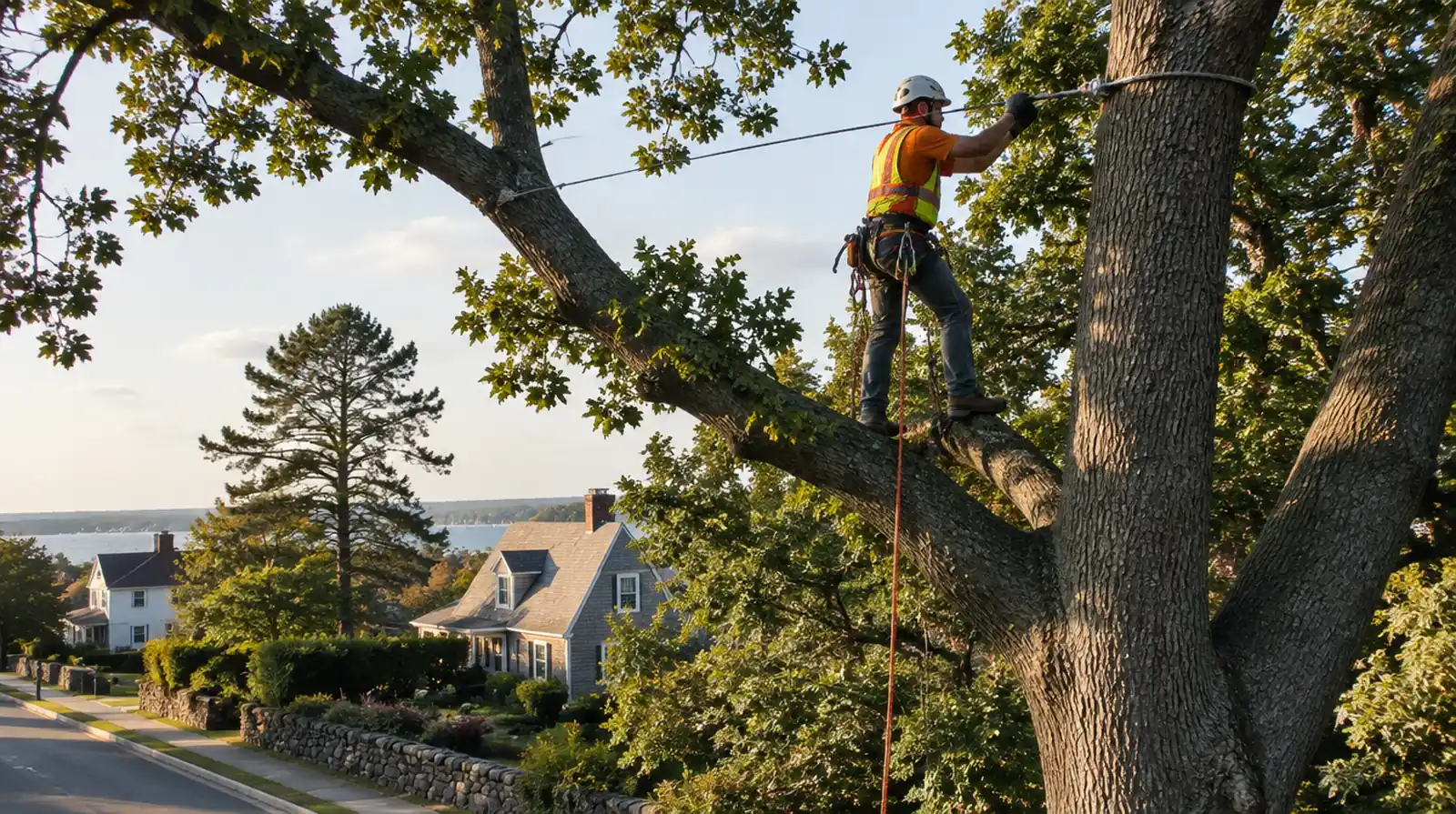
How Cabling and Bracing Work
These are two separate techniques. A cable is a steel line set between two stems or limbs up in the crown, placed well above the weak joint so it has leverage over it. It's installed with a little slack, so the tree sways normally in a light breeze and the cable only takes load when a strong gust tries to spread the stems. A brace is a solid threaded rod drilled through the wood at the crack or fork and bolted tight, so the two sides can't pull apart. Badly split trunks often get rods low and a cable high.
Signs a Weymouth Tree Could Use Support
Look at where the trunk divides. Two stems close to the same size, growing tight together with a deep crease of bark trapped between them, is the shape that tends to fail. Also watch for a dark seam or crack below that crease, one part of the crown rocking separately in wind, or a long limb stretched over the roof, the driveway, or the deck. Support makes sense when the rest of the tree is healthy, it's big enough to matter, and a failure would land on something you care about.
On the older streets of North Weymouth, Weymouth Landing and around Jackson Square, many yards have big red and Norway maples, oaks, and sometimes a white pine that has grown well past the roofline. Pears planted in newer developments in the eighties and nineties are prone to splitting as they reach full size. Mature hardwoods with two leaders at the top are the trees most often worth saving with hardware.
How a Weak Joint Develops
The flaw is set early. When a young tree loses its top or never gets pruned to one main stem, two shoots compete for the lead. As they thicken, the bark between them gets pinched in instead of being replaced by connecting wood. It looks solid from the ground, but that joint holds far less than a normal branch union, and every year of added weight makes it riskier.
South Shore weather tests those joints. Nor'easters bring sustained wind and heavy wet snow, and the neighborhoods near the water along the Fore River and Hingham Bay take wind with little to slow it. Late-season ice can coat a crown before the leaves are even off. Saturated ground after a long storm also loosens roots, so we check the base of every tree, not just the crown. Steel up high can't fix a root plate that is lifting.
What Sets the Price
- The amount of hardware. One cable between two stems is a quick install; multiple cables with rods take longer.
- Climbing and access. Anchors are set high, and tight yards with fences, sheds, and wires mean more rigging time.
- Pruning on the same visit. Lightening heavy limbs is usually done at the same time.
- Later checkups. A short return visit every few years keeps the system adjusted as the tree grows.
The estimate is free and the price is fixed for the scope we agree on. If the climber finds hidden decay once in the tree, we stop and talk it through with you before installing anything.
When Hardware Isn't the Answer
Steel is only as good as the wood it's anchored in. Soft or crumbling wood at the fork, fungus near the base, a hollow trunk, or large dead sections of the crown all mean the bolts would have nothing solid to hold. Adding hardware to that tree just makes it heavier, and removal is the safer call. Support also doesn't replace pruning. Often, weight taken off the ends of the limbs relieves most of the strain, and a cable handles what's left. After an in-person look, we'll tell you whether to support the tree, prune it and leave it, or plan a removal, including when it isn't worth saving.
Questions About Tree Cabling in Weymouth
How long does the system last?
The steel is durable, but the tree keeps growing around it. An anchor that gets buried in new wood, or a cable that has pulled tight, needs adjusting, so plan on an inspection every few years.
Will drilling harm the tree?
The holes are small, and a healthy tree seals them off. The real damage comes from bad installs, like a cable looped around a limb, which strangles the branch as it grows.
Does cabling guarantee the tree won't fail?
No. It lowers the risk at one specific weak point. A severe enough storm can still bring down a sound tree, and anyone promising otherwise isn't being straight with you.
Is it less expensive than removal?
Often, yes. A mature shade tree also adds something to a property that a new sapling won't match for decades. Whether support makes sense depends on the condition of the rest of the tree.
Call (781) 679-1061 and we will look at the fork and tell you whether the tree is worth supporting.
Ask about cabling
Send a few details and we'll get back to you with a price and a date.
Powered by Splitforms